Will I or Won’t I?

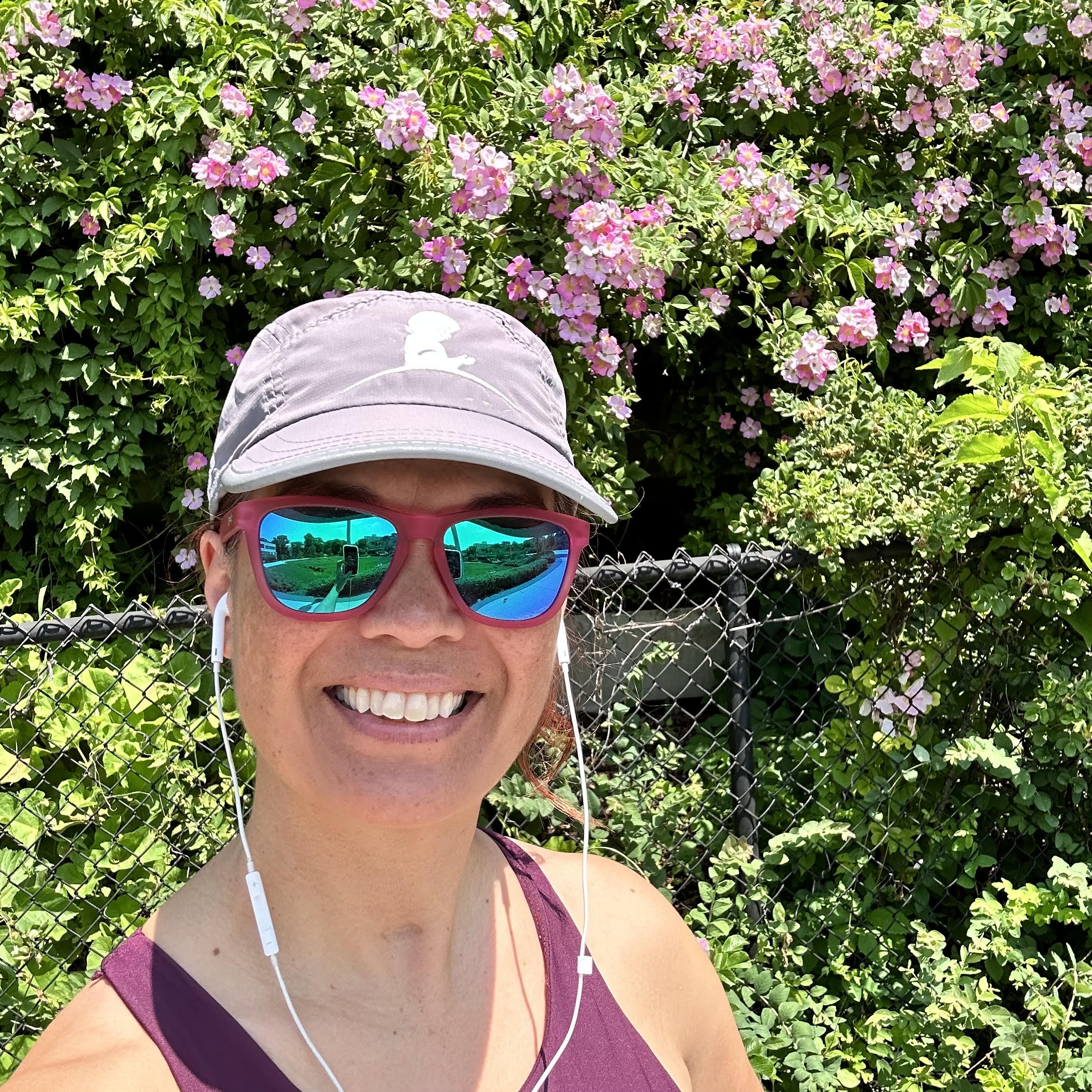
The last time I wrote, I shared that I was training for my 3rd Chicago marathon. Well, marathon training is ramping up with my first double digits run happening this weekend. I’ve been pushing myself to be consistent in my training in hopes of being able to – if not get a new personal best time – then to at least finish in under five hours. Seeing as the last time I ran a marathon in under five hours was over a decade ago, I know it’s a lofty goal. But, it’s one I’m still willing to work for.

I’ve shared here before that I love how running is truly an excellent analogy for life. We are all running this marathon called life together, and while there are always other factors at play, how well we do primarily depends on how much work we are willing to put in. We all have the same start and will all end up at the same finish. I’m not trying to be metaphorical here. We are all born, and we will all die. What we do with the time we have between those two points will determine how successful we are, just as the training I choose to do (or not do) determines how successful my marathon attempt will be.

As a former varsity cross country and track coach, I used to remind my athletes that they needed to focus on running “their” race. There were always going to be runners who were faster than them, and for some of them having a 1st, 2nd, or even 3rd place finish was not realistic. They needed to keep their own goals in mind as those were the ones that were realistic for them. Now, as a life coach for adults, I use a goal format where one of the tenants are for the goal to be “realistic.” It’s the non-running version of running your own race. While it’s important and necessary for us to aim high, if we consistently create unattainable goals for ourselves we will end up feeling defeated. I have always set high expectations for myself, my former students and athletes, and now my clients, but they have been designed around realistic outcomes. I never set a goal for a brand new runner who could barely run 10 minute miles to cut that time to 4 minute miles by the end of the season, but I would set the goal that they shave it down to 7 or 8 because while it would take hard work on their part, it was still something I knew they could accomplish.

So, I guess I said all that to say this – is running a marathon in under 5 hours a realistic goal for me? At this point and time, I’m saying yes. Now…ask me again a month from now, and we’ll see if my answer has changed. Follow along on my training journey to find out!

Also, I’m running the marathon in support of Girls in the Game, a fantastic organization providing sports programming and more for girls all throughout Chicago. If you’d like to make a donation, please click here for my fundraising page. Every dollar counts, and is fully tax-deductible.

Thank you for your support as both a reader and a donor!
The Eyes Have It

When I was in elementary school, I participated in my school’s Young Author’s Conference. I believe I was in the third grade, although it was such a long time ago that I can’t be sure. I was extremely proud of my story, which placed in one of the categories and earned me a spot in the author’s conference session, where we were partnered with actual authors to share our stories, hear the feedback, and get advice from professionals. It was such an exciting accomplishment for me as I’ve shared before on this blog that I have always loved to write. This early experience convinced me that I could have a career as an author one day. As much as I loved to read when I was a child, it was exhilarating to believe that I could grow up to write my own stories for others to enjoy. Not only did I get to participate in the author session, but I was actually featured in our local newspaper. There was a large picture of me with my partner author, whose name I can’t currently recall, right in the middle of the page containing the full article. In the picture we are looking over my story together, and in the article itself, there are a few paragraphs dedicated to me and my story. I distinctly remember how excited I was about this whole event as a child, but decades later as an adult uncovering this article looking over it again brought up so many feelings of ostracism, isolation, and even shame.

How is it that one of my greatest achievements as a child could bring up so many negative feelings for me as an adult? To start, it’s important to understand that I am the first-born, first-generation daughter of a Filipino immigrant mother. I am so proud of my heritage – the way I was raised, the way my mother worked so hard to support me single-handedly the majority of my young life, and even the fact that she left behind everything she knew and everyone she loved to come to this country in order to make a better life for herself and her family. However, often being the only child of Asian descent in white, suburban middle America wasn’t without its struggles – especially as part of Generation X. Other children didn’t understand why I looked different and had no qualms expressing their opinions about it. According to many of my classmates, my skin was too dark, my nose was too big, and my eyes were too squinty or funny-looking. I was often asked what was wrong with me or why I “looked like that.” If I shared these incidents of teasing, ridiculing, or even sometimes outright bullying behavior with my mother, her response was to ignore it, work hard, prove myself by not getting in trouble and getting good grades, and eventually I would earn their respect. (There’s a reason why Asians were called the model minority for years.) Needless to say, that’s not what actually ever happened. While I intimately know and understand that we are responsible for our own choices and behavior in life, I also know that a lot of my younger self’s bad choices and behaviors were impacted by the way others treated me.

As a middle schooler, I went to live in Florida with my father where the racism and discrimination increased even more. To start with, I was the only Asian living in the all white family of my father, step-mother, and step-siblings. People didn’t understand how I was even related to them, and when they were told that my mother was from the Philippines, their initial reactions usually centered around assuming that my father had been in the military and my mom was a “rescued” bride. Disclaimer: my mother was already living in the United States working as a nurse when she met my father, who never served in the military. She didn’t need rescuing from anyone. Additionally, because I am only half Filipino coupled with the fact that in the mid-to-late 1980s the general public wasn’t as familiar with Filipino culture, no one ever knew what my ethnicity actually was. People assumed I was Hispanic, Black, Black/White mixed, Native American, or even Chinese. This ambiguity had me on the receiving end of basically every type of racial/ethnic slur at some point or another in my life as people would place me in whatever box they felt I fit. I could go on at length about those experiences, but suffice to say that they left an impact I can still feel today.

So going back to that newspaper article… When I came back home to Chicago, my mother gave me a keepsake album she had of mine. As I flipped through the pages, there was the aforementioned article jumping out at me. I instantly remembered the excitement and pride I had felt as a child living that experience and began reading the article. When I got to the part where the author was describing me, all I can remember is how the words “almond shaped eyes” jumped off the page and struck me in my soul. I had people make fun of my eyes all through my childhood and adolescence. As an adult, people have used my eye shape to justify their racism and discrimination. Looking at those words in the newspaper, all I could think was that this reporter was just one of countless many who helped shape the negative image I used to have about my eye shape that I still battle today. Even now, my go-to is to deflect my hurt that reading that statement caused for me and justifying it by saying that the reporter probably didn’t mean anything negative with her words and was just trying to describe me.

The eyes are the windows to our souls as they are usually the most honest part of our human bodies. As Asian American Pacific Islander month comes to a close, let’s remember to look past a person’s eye shape or any other preconceived ideas about them and instead towards our shared humanity and ways that we are interconnected so that we can create bridges and not walls.